National Museum
With a unique digital card.
How well do you really know Sarajevo?
ONE CARD. THREE WAYS TO EXPERIENCE SARAJEVO.
How well do you really know Sarajevo?

By clicking the 'BUY NOW' button and completing the purchase process, you will receive your Culture Card in digital format to your email address.
The digital ticket attached to the email contains a BAR code which you present to the operator for scanning upon entry to the attraction. The ticket is personalized and valid for one person.
With the Culture Card, you can visit each attraction listed in the purchased Culture Card package once. One card is valid for one person.

preserves and transmits the legacy of the XIV Winter Olympic Games of 1984 – one of the most significant moments in the city's history. Through a rich collection of exhibits, photographs, and multimedia content, the museum showcases the Olympic spirit, the development of sports, and Sarajevo's role on the world sports stage. As a symbol of unity, energy, and international significance, the Olympic Museum offers visitors an inspiring journey through the story of a city that hosted the world.

offers a powerful and authentic insight into the country's past through carefully curated exhibitions that connect history, society, and everyday life. Through a rich collection of artifacts, documents, and multimedia content, the museum opens up a space for understanding key events that shaped Bosnia and Herzegovina, as well as for contemplating contemporary social issues. This is a place where history is not just displayed, but told in a way that leaves a strong and lasting impression on every visitor.

Sarajevo City Hall, one of the most representative buildings in Sarajevo and Bosnia and Herzegovina, has a rich history. As a city hall, and even more so as the decades-long home of the National and University Library of Bosnia and Herzegovina, the City Hall has been at the center of all significant political and cultural events in Sarajevo and Bosnia and Herzegovina for over a century. It witnessed the succession of several state systems, the Sarajevo assassination, the terrible events of two world wars, the unique rise of the city during the XIV Winter Olympic Games in 1984, and finally, as the National and University Library, it was subjected to barbaric attack, burning, and destruction. It thus became a modern metaphor for urbicide and culturicide.

brings a completely new entertainment experience through the world of virtual reality, where the boundaries between real and digital disappear. Through advanced VR technologies and a wide selection of games, visitors can explore different worlds, solve challenges, and experience adventures not possible in real life. Whether you come for adrenaline, fun, or a team experience, VR Escape offers an interactive and dynamic environment that adapts to every user.

offers a powerful and authentic experience that, through personal stories, objects, and testimonies, reveals what it's like to grow up in war. This is not a classical exhibition, but an encounter with real emotions and destinies that leave a deep and lasting impression. Through carefully selected stories, visitors gain insight into a universal dimension of childhood marked by war, transcending borders and time. A visit to the museum provides an opportunity to understand the past in an intimate, human way and to leave with a different perspective on the world around you.

is a place where contemporary art finds its full expression – a dynamic space that brings together artists, ideas, and audiences in a unique experience. Through exhibitions, performances, and talks, the gallery opens up new questions and offers a different perspective on the world around us. Located in the heart of the city, Manifesto is not just a gallery, but a space for encounter, inspiration, and contemporary culture that makes Sarajevo vibrant and relevant.

it is not a classic museum exhibition, but an intimate journey through the memories of a city. Through personal items, photographs, and fragments of everyday life, Sarajevo is revealed as it is not found in guidebooks – a city of emotion, habits, and quiet stories that shaped it. This is a place where the past is not told through dates, but through people, moments, and a feeling that lingers long after a visit.

is a unique contemporary art concept in Sarajevo that connects the local scene with international art trends. Created as an initiative of solidarity during the war years, today it represents a valuable collection of works by world-renowned artists. As a space for encounters of ideas, cultures, and diverse artistic expressions, Ars Aevi offers visitors insight into contemporary art through a global perspective, while preserving a strong symbolism of community and cultural exchange.

Discover the city through its most authentic gallery – the street. This street art tour leads you through three open-air galleries, where, with expert guidance, you learn about the stories, artists, and context of the murals that shape the city's contemporary identity. For 1 hour and 15 minutes, you'll follow a carefully selected route that combines art, community, and urban energy, offering a completely different perspective on Sarajevo.

The museum exhibition Valter Defends Sarajevo takes you to the heart of one of the most famous film stories from this region. Through authentic props, set design, and multimedia content, visitors have the opportunity to experience the film's atmosphere and learn about its historical and cultural significance. This is an experience that connects film and reality, revealing why Valter became a symbol of resistance and one of the most recognizable characters in the region's cinematic history.

Sevdalinka is a traditional Bosnian-Herzegovinian song deeply rooted in urban life and collective identity, which through generations conveys emotions of love, longing, and everyday experiences. Originating in urban settings, it developed through various social strata, combining personal stories with the cultural and historical context of the time.

guides you through key historical moments in a way that is not just observed, but experienced. Through immersive VR simulations, visitors have the opportunity to follow the sequence of events that shaped the 20th century – including the assassination of Franz Ferdinand – from the perspective of a witness. This is an experience that connects history, technology, and emotion, allowing you to understand events not only through facts, but through the feeling of the time in which they occurred.

it offers a unique journey through the history of healing – from traditional apothecary shops and medicinal herbs to the modern pharmaceutical industry. Through more than 600 exhibits, rare books, and authentic tools, the story of science, innovation, and the people who shaped pharmacy in Bosnia and Herzegovina is revealed. This is a place where tradition, knowledge, and fascinating stories meet.

follows the life and work of Bosnian and Herzegovinian authors and bears witness to a diverse and interesting life, full of terrible and difficult blows, but also to an impressive output rarely seen.
Its collections currently hold 67 literary and 37 theatrical collections with over 20,000 exhibits, including manuscripts, correspondence, personal documents, photographs, books, magazines, as well as extensive theatre documentation – posters, set and costume design sketches, and archival photographs of plays.

the headquarters of Avaz-roto press and the newspaper Dnevni avaz, is the tallest building in Southeast Europe and one of the key symbols of modern Sarajevo. With a height of 172 meters and a panoramic viewpoint, it offers a unique view of the city, while its distinctive design and international awards confirm its architectural value.

is the perfect place for those looking for an
experience different from a classic night out.
Unlike classic gaming, here you don't sit in front of a screen. Players enter the space, move around, interact, and together navigate virtual worlds that react to their every move.
This is precisely what makes this concept special: it is an experience that simultaneously combines technology, interaction, active movement, and an experience that transcends traditional forms of entertainment.

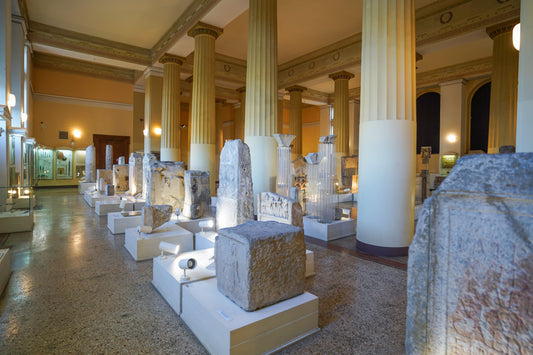
houses the richest collection of cultural, historical, and natural heritage in the country. From medieval Bosnian charters and the famous Sarajevo Haggadah, to archaeological sites and a rich botanical garden – the museum offers a unique journey through the history and nature of Bosnia and Herzegovina. It is an unmissable destination for anyone who wants to get to know the identity and richness of this country.

shows us the period from 1945 to 1992 – a time when Sarajevo was a center of music, sports, art, and urban life. Through personal stories, archival materials, and carefully designed spaces, visitors discover the spirit of the city, its development, and the daily life that shaped its identity.
Through modern technologies, interactive installations, and powerful storytelling, Sarajevo's past doesn't remain behind glass but comes alive before the visitor.

is an authentic example of Sarajevo’s urban architecture from the Ottoman period. Its chambers reveal the lifestyle, customs, and family everyday life of Sarajevo residents of that time. A visit to this museum offers a unique insight into the blend of tradition, intimacy, and cultural heritage of the city. It serves as a valuable reminder of the lifestyle and spirit of old Sarajevo.

is dedicated to the period of Austro-Hungarian rule in Bosnia and Herzegovina. Through authentic exhibits, documents, and reconstructed interiors, it evokes life in Sarajevo during a time of modernization, urban development, and political upheaval, including events related to the Sarajevo Assassination. The museum recreates one of the most dynamic chapters in the city's history.

it is one of the oldest preserved city houses in Sarajevo and a testament to the life of the distinguished merchant family Despić. The first theatre play in the city was held there, thus it is rightfully considered the cradle of Sarajevo's theatre. The atmosphere of the house evokes the spirit of bourgeois Sarajevo from the late 19th and early 20th centuries.

is the story of a group of enthusiasts who were once teenagers and children in besieged Sarajevo. Through "Sarajevo 1425" they wanted to share their stories and the stories of those who survived with the world. These are not just stories of suffering, terror, numbers, poverty, and fears. These are stories about human lives and values, about culture, music, theatre, about the resourcefulness and spirit of those who survived for 1425 days.

built in the 16th century, it is one of the most significant architectural structures of the Ottoman period in Sarajevo. Once a trade center for silk and precious fabrics, today it houses a rich collection of archaeological and ethnological exhibits. A walk through its stone corridors takes visitors on a journey through centuries of Sarajevo's history.

located in the old 16th-century synagogue, one of the oldest preserved in Europe. The exhibition bears witness to the rich history and tradition of the Jewish community in Sarajevo, preserving valuable manuscripts, books, and everyday objects. A special place is held by the Sarajevo Haggadah, one of the most significant Jewish manuscripts in the world.
Visit our Instagram profile and follow all the news


Discover the city through the stories that make it special!